Wearables and Depression Care: What a Responsible Product Needs

Summary
- Wearable sleep, activity and heart-rate data can help clinicians follow depression care between visits — as support, never as a diagnosis.
- Compare each patient with their own baseline, not a population average, and describe changes in plain words rather than “risk scores”.
- Consent must be specific and revisable, data collection minimal, and GDPR or HIPAA planned from the first sprint.
- Tune alerts with clinicians to avoid alarm fatigue, test for bias across groups, and validate with clinical partners before claiming usefulness.
Sleep, activity and heart-rate data from wearables can help clinicians follow depression care between visits, but only if the product is built with care. This article looks at the whole job from an engineering team's point of view: which signals are worth collecting, what they can and cannot tell you, how to handle consent, how to test for bias and false alarms, and where such a tool belongs in a clinic's day.
Start with the gap the product is meant to close. Most depression care runs on conversations: an appointment every few weeks, a questionnaire such as the PHQ-9 filled in at the desk, and the patient's memory of how things have been going. Memory is a weak instrument when someone is unwell. A hard week can colour a whole month, and a good morning before the appointment can hide one. Clinicians know this and work around it, but they rarely have anything steadier to lean on.
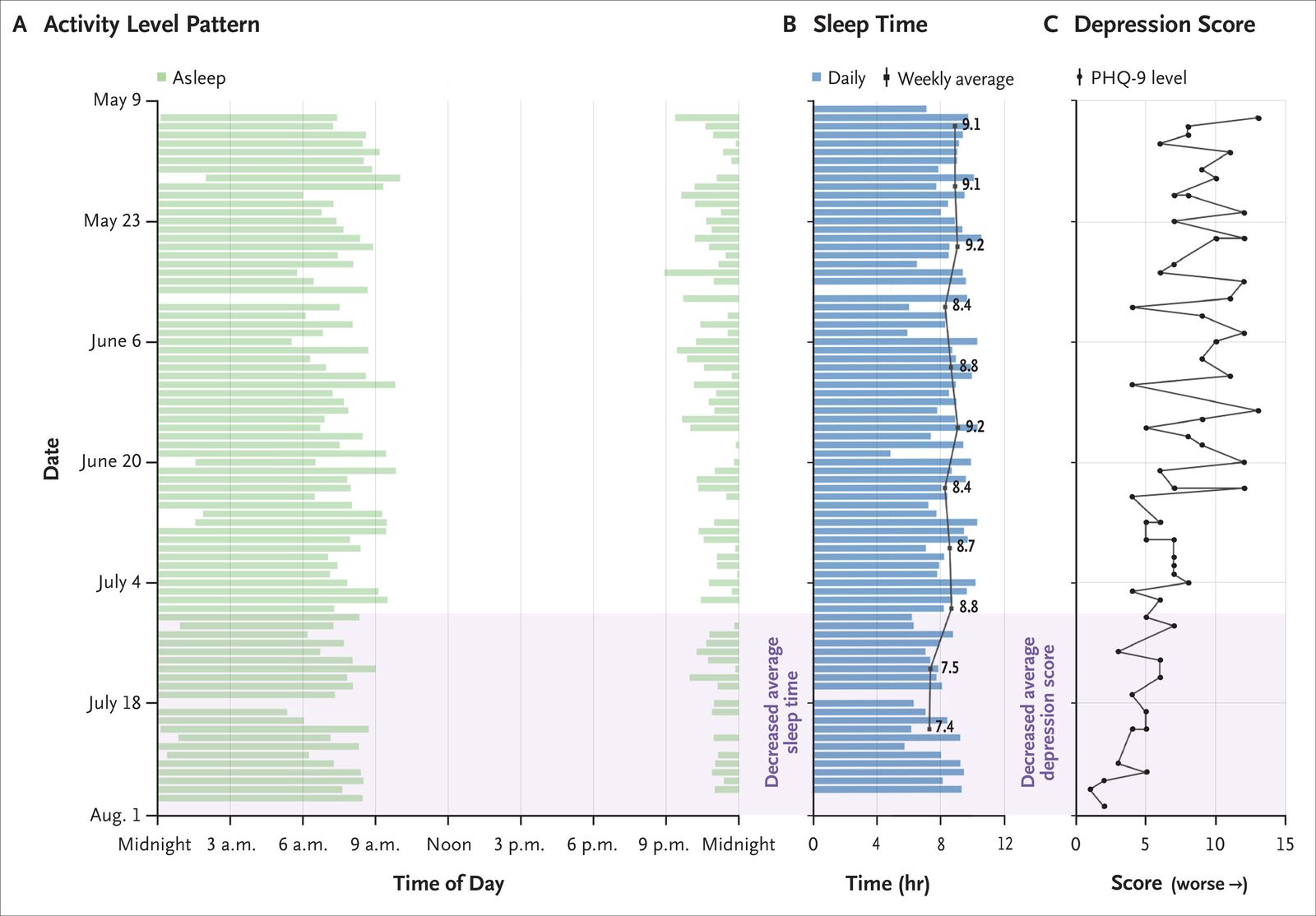
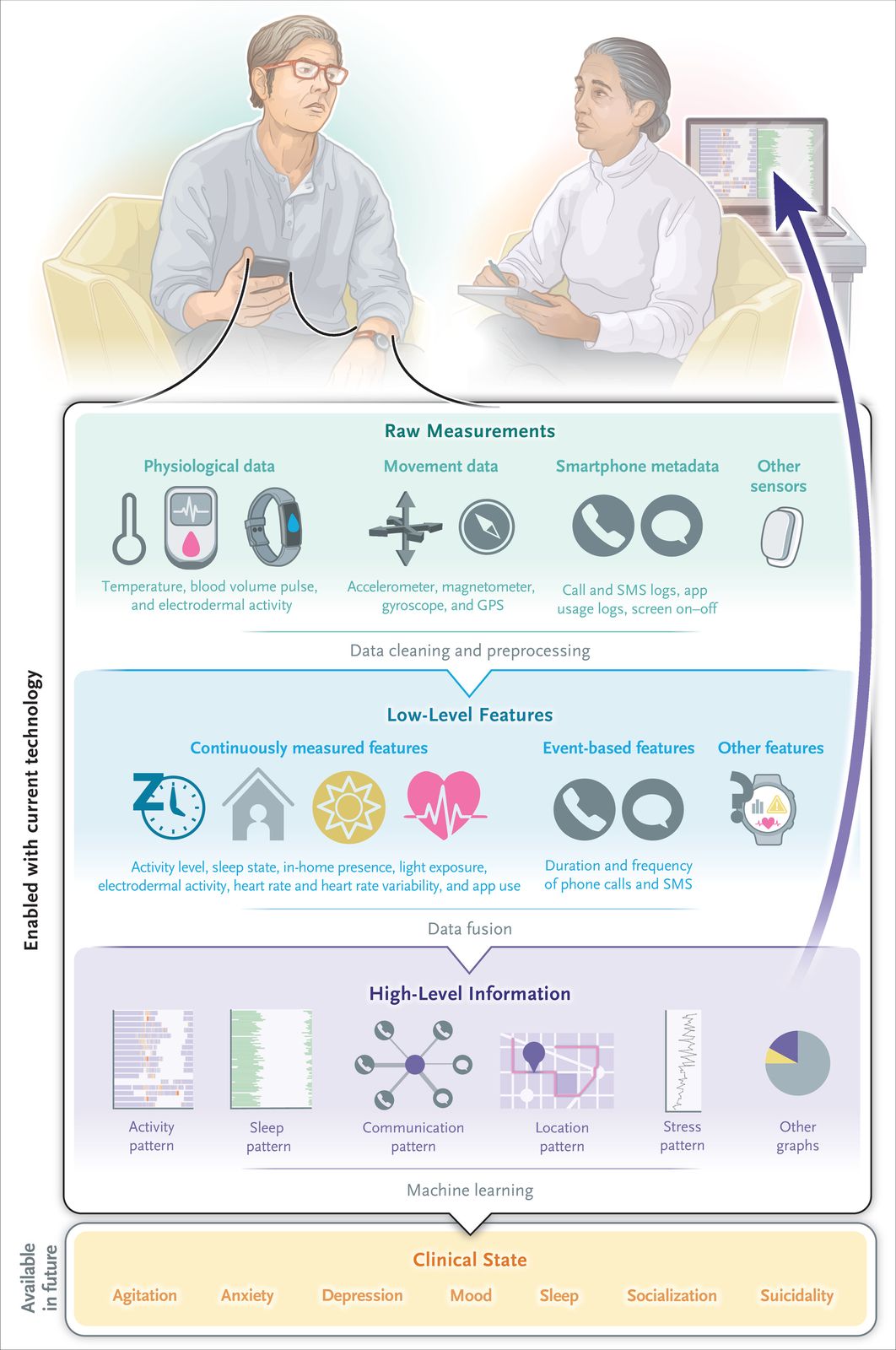
A watch or ring worn day and night records things the person never has to type in. It notices when they fell asleep, how often they woke, how much they moved, and how their heart behaved at rest. None of that is a mood reading. It is behaviour and physiology, logged quietly, and its value comes from the long view: weeks of the same person's data, not a single night.
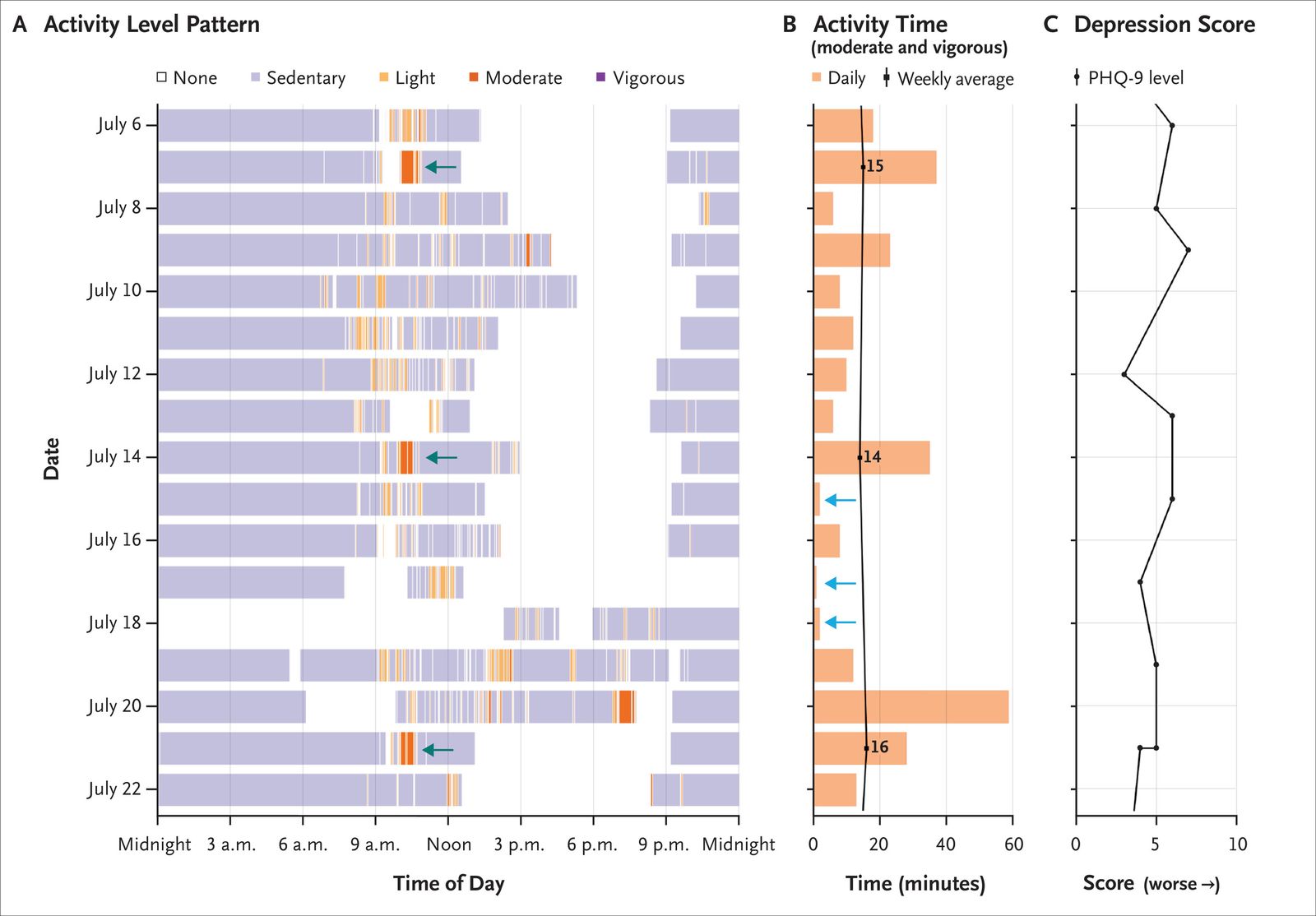
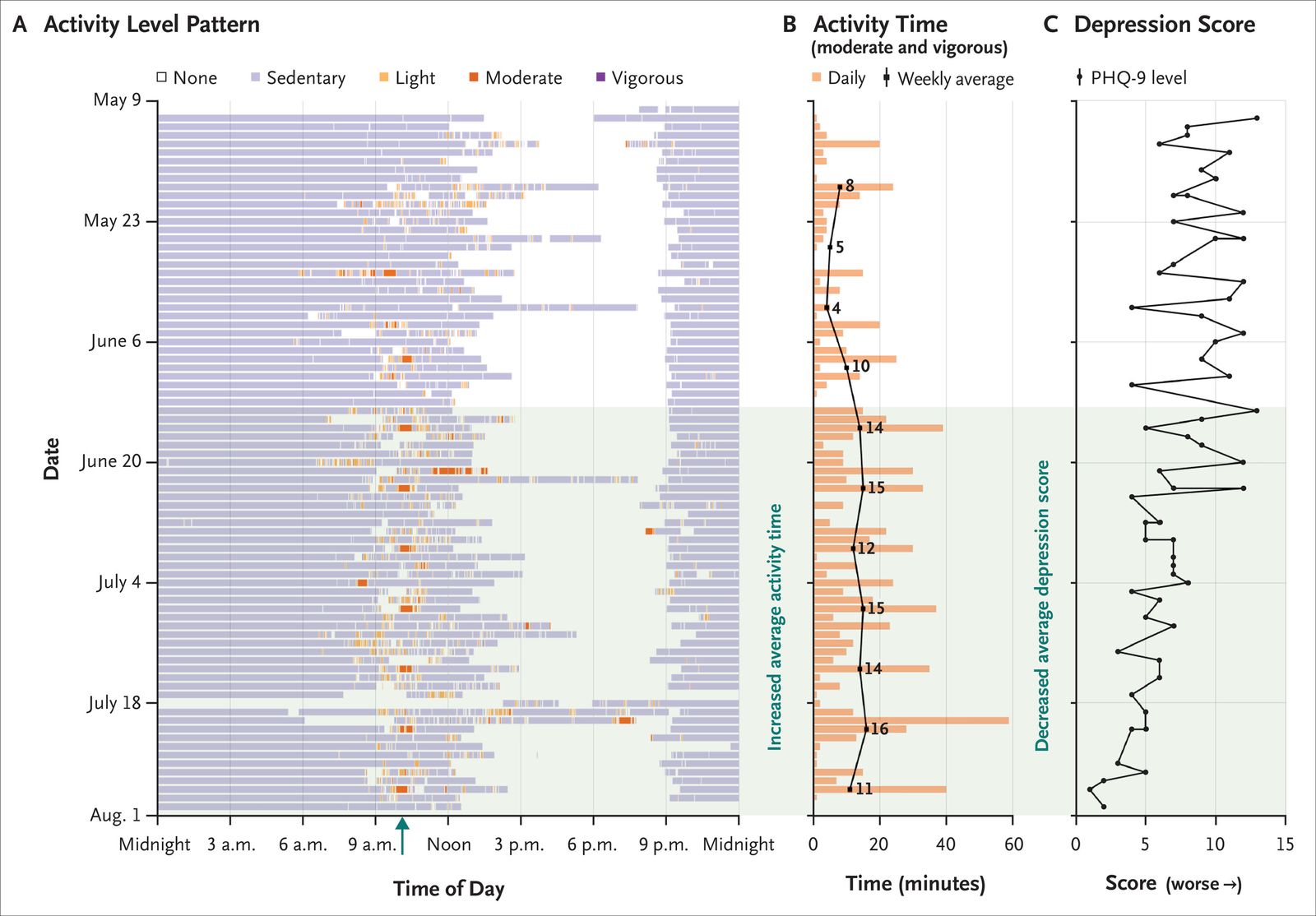
Some signals are more plausible than others. Sleep timing and regularity are a sensible starting point, because disturbed sleep is common in depression and consumer devices estimate it reasonably well. Daily movement and time spent outside the home can reflect withdrawal or recovery. Heart-rate variability is linked to stress and to how the nervous system is coping, though it is also shaped by fitness, age, alcohol, illness and medication. A team that treats every one of these as noisy and context-dependent will make better decisions than one that treats them as answers.
That leads to the rule we would put at the top of any spec: the product supports clinicians, it does not diagnose. Depression is identified through a clinical assessment by a qualified professional. A drop in step count could mean low mood, a sprained ankle, a new job or a rainy fortnight. The software can say that something changed and show the pattern clearly. Deciding what the change means, and what to do about it, belongs to the clinician and the patient together.
Framing matters in the interface as much as in the model. Labels like "risk score" or "depression level" invite people to read more into a number than it can carry. Plainer wording works better: "sleep has been later and more broken than your usual for ten days" is honest, checkable and useful in a consultation. Where a model does produce an estimate, it should come with its uncertainty and a short note on which inputs drove it.
Personal baselines beat population averages. Resting heart rate, sleep length and activity vary hugely from one person to the next, so comparing a patient to a generic norm mostly measures who they are, not how they are doing. Comparing them to their own previous weeks is far more informative. It also means the product needs a settling-in period before it says anything, and a way to reset the baseline after a major life change such as an injury, a new baby or a move to night shifts.
Finally, the patient should get something from the arrangement too. If people are asked to wear a device and share intimate data, they deserve a clear view of what is collected, a simple summary they can understand, and the option to pause. Tools that feel like surveillance tend to be taken off, and a device in a drawer produces no data at all. Anyone who is struggling right now should speak to a doctor or mental health professional; a wearable is never a substitute for that conversation.
Consent, Privacy and Who Sees What
Mental-health data sits near the top of the sensitivity scale. Location traces, sleep times and heart data can reveal routines, relationships and health conditions well beyond depression. Consent therefore has to be specific and revisable: which signals, for what purpose, seen by whom, kept for how long. A single checkbox at sign-up does not meet that bar. Patients should be able to switch individual data streams off without losing access to their care.
On the engineering side, collect the minimum. If the clinical question is about sleep and activity, there is no reason to store raw GPS coordinates or message logs. Process on the device where possible, send derived daily summaries rather than raw streams, encrypt in transit and at rest, and keep access logs that show exactly who opened a record. Plan for the rules that apply in each market, such as GDPR in Europe or HIPAA in the United States, from the first sprint rather than bolting them on before launch. Decide early what happens to the data when a patient leaves the programme.
Validation, Bias and Fitting Into Care
Before any model is trusted, the data under it has to be trustworthy. That means detecting when the device was not worn, flagging nights where the battery died, handling firmware updates that quietly change how a metric is calculated, and noticing when readings from different brands are not comparable. Much of the real work in a wearable health product is this unglamorous plumbing, and skipping it produces confident charts built on gaps.
False alarms deserve as much attention as missed changes. A system that pings a care team every time someone has a late night will be muted within a month, and alert fatigue is a safety problem in its own right. Thresholds should be tuned with clinicians, alerts grouped into a digest rather than fired one by one, and every alert should link to the underlying data so a person can judge it in seconds. It must also be clear that the tool is not an emergency service and that urgent concerns follow the clinic's existing crisis procedures.
Bias shows up in several places. Optical heart sensors can perform differently across skin tones and body types. Older adults, shift workers, people with disabilities and people who cannot afford the latest device may produce data that looks unusual simply because their lives are organised differently. If a model is trained mostly on young, healthy volunteers, it will learn their patterns as normal. The fix starts with measuring performance separately for each group you intend to serve and publishing the gaps you find, not only the headline result.
Validation has to happen with clinical partners, not just on a held-out test set. The honest sequence is a feasibility pilot to see whether patients keep wearing the device and whether clinicians open the dashboard, then a careful study comparing the signals against structured clinical assessments, and only then any claim about usefulness in care. Depending on what the product claims to do, it may also count as a medical device in some jurisdictions, which brings its own regulatory path. Claims should never run ahead of evidence.
The last question is where the tool lives in the care pathway. The best version we can picture is modest: a one-page summary ready before an appointment, showing sleep, activity and heart trends against the patient's own baseline, alongside their recent questionnaire answers. The clinician uses it to open a better conversation, not to replace one. At MLMind we build medical imaging tools like MedicMinder on the same principle: software should help a professional see more in less time, while the decision stays with them. If you are planning a product that works with wearable or health data, we are happy to talk through the architecture, privacy design and validation plan with you.