

Case study · Fintech · payments
Engineering on a US payments and banking platform for merchants
Netevia lets US merchants accept cards online, in person and inside other software, and runs their business banking. MLMind delivered web application and integration work on the merchant-facing platform alongside Netevia’s own team.
- What we built
- Web application and integration work on the merchant console and onboarding flows
- Industry
- Fintech · payments
- Our role
- Client project, delivered alongside the client’s team
Quick answers
- 01
Built: web application and integration work on a payments and banking platform for US merchants.
- 02
For: merchants accepting payments online, in person and embedded in other software, and the ISOs who resell the platform.
- 03
Scale: 40,000+ merchants and $15B in processing volume on the platform (published by Netevia).
- 04
Stack: React and Node.js against the platform’s payment and banking APIs.
- 05
Outcome: merchant-facing flows delivered inside a regulated, high-volume environment, working as part of the client’s engineering organisation.
Overview
Netevia is a payments and banking platform for US merchants: card acceptance online, in person and embedded in other software, business accounts and cards, and a console that brings merchant operations into one place. Banking services are provided through Sutton Bank, Member FDIC. MLMind contributed engineering capacity to the merchant-facing web platform, working inside the client’s processes, code base and release cycle. The work is the client’s product; our part was to build assigned flows to their standard and on their schedule.
Challenges
Regulated from the first commit
Payments and banking carry PCI and banking-partner requirements. Every screen that touches card or account data had to follow the client’s compliance rules exactly.
Many products, one console
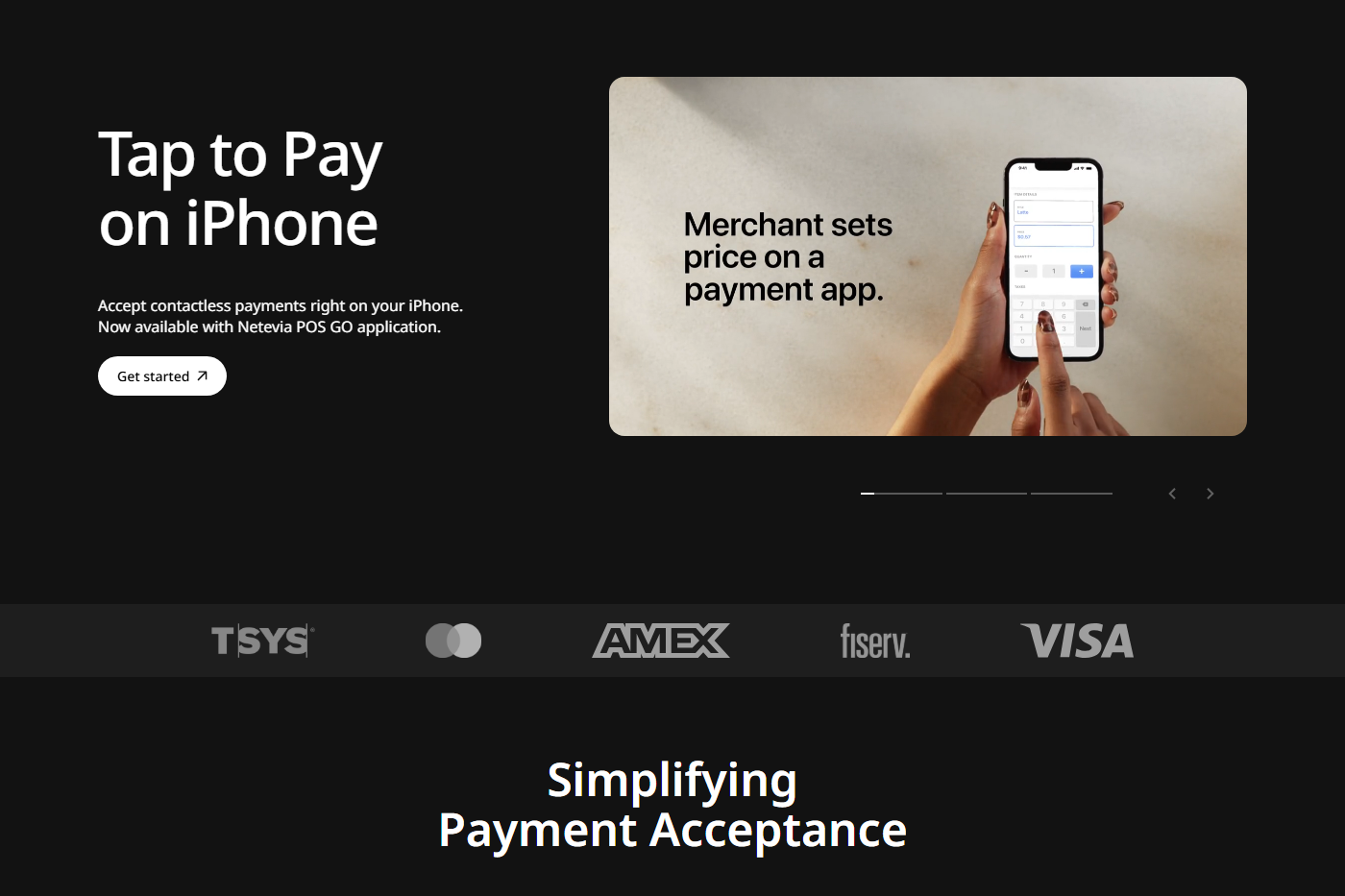
Tap to Pay on iPhone, a POS app, PIN pads, payment links, an API and hosted forms all surface in the same merchant experience. Consistency mattered more than novelty.
Working inside another team
Code review, release windows and conventions were the client’s. The job was to fit in, not to bring our own way of working.
Volume is real
With tens of thousands of merchants, a slow screen or a broken edge case is not a bug report, it is a support queue.
How it works
Scope with the client team
Flows were assigned from the client’s roadmap with acceptance criteria agreed up front.
Build in their code base
Web application work in the client’s repositories, following their patterns, review and CI.
Integrate
Screens wired to the platform’s payment and banking services with the client’s API contracts.
Ship on their schedule
Releases through the client’s pipeline and release windows, with their QA.
What we delivered
Merchant-facing web work
- Console and onboarding flows
- Integration with payment and banking services
- Front-end work to the client’s design system
Ways of working
- Work inside the client’s repositories and CI
- Weekly reporting to the client’s engineering leads
- Capacity that scales with the roadmap
By the numbers
Every figure shows where it comes from. We do not publish numbers we cannot point to.
Stack
 React
React Node.js
 PostgreSQL
 Docker
 AWS
AWS
Questions
No. Netevia is the client’s product, built by the client’s team. MLMind delivered assigned web application and integration work on the merchant-facing platform as part of that team.
Tap to Pay on iPhone, the POS GO app, PIN pads, payment links, a payment API, a prebuilt payment form, business and personal banking, instant funding and embedded finance, all managed through Netevia HQ.
Engineers work inside the client’s repositories, processes and release cycle, report weekly, and scale up or down with the roadmap. See the engagement models on the services page.
Your project
Want something like this for your business?
Tell us what you are trying to do. An engineer replies within one business day with an honest first read, and the estimator gives you a budget range in three minutes.
- Reply within one business day
- Free 30-minute consultation — no obligation
- NDA before any details change hands
- Working prototype in 3–6 weeks
- You own the code and the models